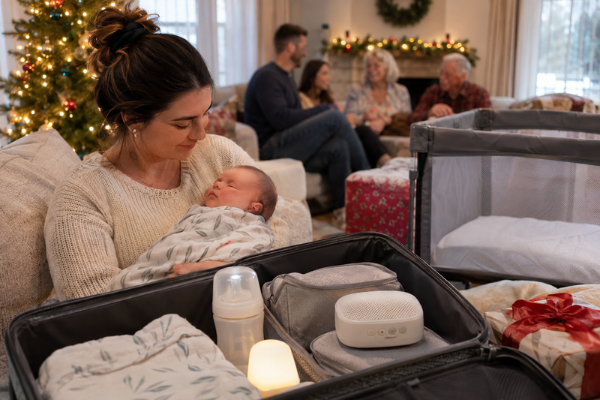
Traveling With a Newborn Over the Holidays
The holiday season often brings new places, extended family, and a full calendar of gatherings. For parents of a newborn, these moments come with an added layer of planning. With careful preparation and a few consistent routines, families can protect much of their baby’s rest and come home with healthy sleep habits still in place.
This guide covers practical newborn sleep holiday travel strategies, from packing and travel days to busy households and the first nights back home.
Setting Realistic Expectations for Newborn Sleep During Holiday Travel
Newborns respond to their surroundings, and a new room, new sounds, and a shifted schedule can all affect how they settle. Some naps may run shorter, and the first night in a new place may involve extra wake-ups. These changes are a normal part of adjusting, and most babies settle into a new space within a few days.
Families can make travel easier by focusing on three priorities:
A safe sleep space for every sleep. Your baby needs a flat, firm surface in a familiar setup, wherever you stay.
A familiar bedtime routine. Repeating the same steps in the same order gives your baby a strong signal that sleep is coming.
A steady feeding rhythm. Keeping feeds on schedule helps your baby stay comfortable and well rested.
Flexibility supports the rest. A nap in the car seat while the car is moving, or a contact nap in your arms while you are awake and alert, can help your baby get through a long travel day. Once you arrive, move your baby to a flat, safe sleep surface for continued rest. The AAP safe sleep guide for parents advises against letting babies sleep in seating devices outside of car travel.
Packing for Consistency: Traveling With a Baby Sleep Tips
Familiar items help your baby recognize sleep time in an unfamiliar setting. When you pack, put consistency first and bring the tools your baby already uses at home.
Portable crib or play yard
A portable crib or play yard gives your baby a reliable place to sleep wherever you stay. Choose a model that meets federal safety standards for infant sleep products, and practice setting it up at home before you leave. Use only the fitted sheet designed for that product, and keep pillows, blankets, bumpers, and soft toys out of the sleep space. If relatives or a hotel are providing a crib, confirm the model ahead of time and check it for recalls.
Sound machine
White noise masks unfamiliar household sounds, such as conversation, doors, and holiday activity. A portable sound machine set to the same sound and volume your baby hears at home creates a consistent sleep environment from room to room.
Familiar swaddle or sleep sack
Your baby’s usual swaddle or sleep sack provides a familiar feel and helps signal that it is time to rest. Continue swaddling only until your baby shows signs of starting to roll, and then move to a wearable blanket with arms free.
Additional essentials
A crib sheet from home, which carries a familiar scent
Portable blackout shades or travel blackout covers for daytime naps
Feeding supplies, including enough for travel delays
A small night light for overnight feeds and diaper changes
Managing a Baby Sleep Schedule While Traveling Across Time Zones
Young newborns are still developing their circadian rhythm, so their sleep follows their own need for rest more than the clock on the wall. In the early weeks, follow your baby’s cues and age-appropriate awake periods. Our guide to understanding newborn wake windows by age can help you plan naps around travel days.
For older babies with a more established rhythm, these strategies support a smoother adjustment:
Short trips with a small time difference: For a one- or two-hour change, many families keep their baby on home time for the length of the visit.
Longer trips or larger time differences: Shift naps, feeds, and bedtime by 15 to 30 minutes each day until your baby’s schedule matches local time.
Natural light: Morning daylight helps set your baby’s internal clock. Keep evenings dim and calm as bedtime approaches.
The same gradual approach families use when helping babies adjust to clock changes works well for holiday travel across time zones.
Travel day planning
For road trips, plan driving stretches around your baby’s nap times and schedule regular stops for feeds and diaper changes. For flights, offering a breast or bottle during takeoff and landing can help ease ear pressure. On both types of travel, keep the bedtime routine as close to normal as possible on the evening you arrive.
Supporting Newborn Sleep in a Busy Holiday House
Holiday gatherings bring together family members who are eager to meet and hold the baby. With a little preparation, you can share these moments and still protect your baby’s rest.
Create a calm sleep space. Ask your host for a quiet room away from the main gathering area. A sound machine and dim lighting help that space feel consistent with home.
Share your plan ahead of time. A brief message before the visit helps relatives understand your baby’s nap times and bedtime routine. Gentle, clear phrasing works well, such as: “We are keeping naps in a quiet room so the baby stays well rested and ready to enjoy everyone during awake time.”
Give relatives meaningful roles. Family members can hold the baby during awake periods, help with burping after feeds, or prepare bottles. These roles help everyone feel included and give parents a chance to rest.
Keep safe sleep guidance consistent. Relatives may have learned different sleep practices when they raised their own children. Kindly share that your baby sleeps on their back, alone, in their own crib or play yard, with no blankets or soft items. Caregiver alignment helps your baby get safe, consistent sleep from everyone who helps with care.
Watch for signs of overstimulation. Bright lights, music, and many new faces can be a lot for a newborn. Yawning, looking away, fussing, or rubbing the eyes often signal that your baby is ready for a quiet break.
Getting Back on Track After Holiday Travel With a Newborn
Most babies settle back into their home routine within a few days to a week after a trip. These steps support a smooth return:
Resume your home schedule right away. Return to your usual wake time, nap rhythm, and bedtime from the first full day home.
Repeat your bedtime routine consistently. The familiar sequence of steps helps your baby reconnect with home sleep cues.
Use morning light. Opening the curtains soon after waking helps reset your baby’s internal clock.
Allow time for adjustment. A few extra wake-ups or shorter naps are common in the first nights home and usually ease with consistency.
Prioritize your own rest. Travel is tiring for parents too. Accept help where it is available and rest when your baby rests.
Families who want to build confidence before their next trip can explore our newborn sleep education class, which covers sleep foundations, routines, and transitions.
Personalized Support for Your Family This Holiday Season
Every baby and every trip is different. Our pediatric sleep coaches work with families to create travel plans that fit their baby’s age, schedule, and needs, along with strategies for returning to routine once you are home. Schedule a complimentary coaching call to talk through your holiday plans with our team.
Frequently Asked Questions About Holiday Travel With a Newborn
Can my baby sleep in the car seat once we arrive?
Car seats support safe travel while the car is moving. Once you reach your destination, move your baby to a crib, bassinet, or play yard with a firm, flat surface for continued sleep.
Should I keep my baby on our home time zone while traveling?
For short trips with a time difference of one to two hours, keeping your baby on home time often works well. For longer stays or larger differences, shift the schedule gradually by 15 to 30 minutes per day.
How long does it take a baby to readjust after holiday travel?
Most babies return to their usual sleep patterns within a few days to a week. A consistent wake time, a familiar bedtime routine, and morning light all support the transition.
What are the most important sleep items to pack for travel with a newborn?
A safety-approved portable crib or play yard, a sound machine, your baby’s usual swaddle or sleep sack, and a crib sheet from home help create a familiar sleep environment wherever you stay.
Can my baby sleep in bed with me while we stay with family?
The AAP recommends that babies sleep in the same room as their parents, on a separate sleep surface designed for infants. Bringing a portable crib or play yard gives your baby a safe sleep space in any home or hotel.
